

News
Avengers: Doomsday Trailer Analysis – What Marvel’s First Footage Really Confirms
The release of the first official trailer for Avengers: Doomsday represents a pivotal moment for the Marvel Cinematic Universe. Rather than unveiling a fast-paced montage filled with action sequences and ensemble shots, Marvel Studios has deliberately chosen a restrained and emotionally grounded approach. This decision alone reveals a great deal about how the studio intends to position its next major Avengers event.
You can also check the latest teaser: Thor’s “Avengers: Doomsday” Teaser Explained: What His Odin Prayer Really Means
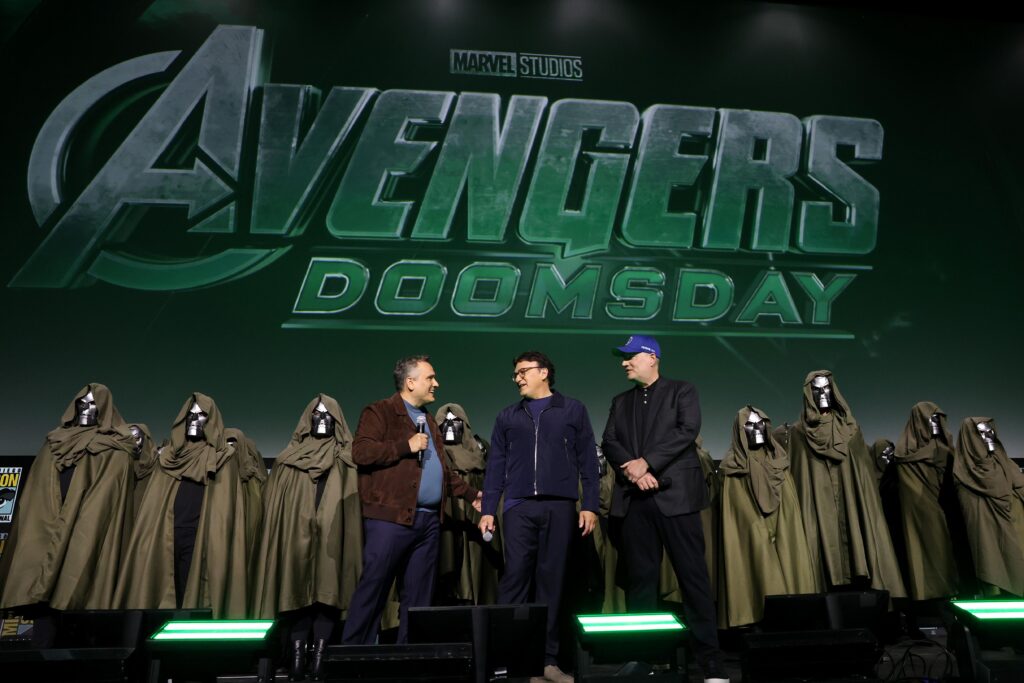
This Avengers Doomsday trailer analysis focuses exclusively on what is explicitly shown in the footage and on narrative signals that can be reasonably interpreted without speculation. No assumptions are made beyond what the trailer visually and structurally communicates. The objective is to understand what Marvel is clearly confirming, not what audiences might hope to see.
Table of Contents
- The Context Behind the Trailer Release
- A Clear Tonal Shift for the Avengers Franchise
- The Opening Sequence and Its Narrative Function
- Why Steve Rogers Is Central to the Trailer
- Visual Language Over Explicit Storytelling
- Domestic Imagery and Emotional Stakes
The Context Behind the Trailer Release
Marvel Studios opted for a controlled rollout of the Avengers: Doomsday trailer, initially screening it in theaters before releasing it publicly online. This strategy mirrors past high-profile Marvel releases, where early theatrical exclusivity was used to generate anticipation and guide the initial narrative surrounding the footage.
More importantly, the studio did not label this release as a “full trailer” or a “story preview.” The footage is concise, focused, and intentionally narrow in scope. Rather than attempting to explain the plot or introduce the full cast, it serves as a tonal and emotional prologue.
In the current content environment, where trailers are often expected to deliver instant gratification, Marvel’s choice to withhold information is notable. It suggests confidence in the material and a desire to reestablish the Avengers brand on narrative clarity rather than scale alone.
A Clear Tonal Shift for the Avengers Franchise
From the very first shot, the trailer signals a tonal departure from previous Avengers films. There is no immediate threat, no rapid editing, and no visual spectacle designed to overwhelm the viewer. Instead, the pacing is slow and contemplative.
This tonal restraint aligns Avengers: Doomsday more closely with character-driven storytelling than with the escalating spectacle that defined earlier ensemble entries. The trailer feels intentionally intimate, suggesting that emotional stakes will precede global or multiversal consequences.
Why Tone Matters at This Stage of the MCU
The Marvel Cinematic Universe has expanded significantly in recent years, introducing new characters, timelines, and narrative threads. While this expansion has broadened the scope of the franchise, it has also made cohesion increasingly important.
By establishing a calm, reflective tone, Marvel provides viewers with a clear emotional entry point. This approach reduces narrative fatigue and re-centers the story around character rather than complexity.
The Opening Sequence and Its Narrative Function
The opening moments of the trailer take place in a rural setting far removed from the urban and cosmic environments traditionally associated with Avengers films. The imagery is deliberately ordinary: a quiet road, a modest home, and an absence of visible danger.
This setting is not incidental. By beginning in a place of calm, the trailer establishes a baseline of stability. It shows a world that is not currently under threat, making any future disruption feel meaningful rather than routine.
Normalcy as a Narrative Tool
Marvel has consistently used moments of normalcy to amplify the emotional impact of later events. In Avengers: Doomsday, this technique is applied with particular care.
The trailer does not portray this peaceful life as temporary or fragile. Instead, it feels settled and earned, reinforcing the idea that the character at the center of the scene has truly moved on from his previous role.
Why Steve Rogers Is Central to the Trailer
The most significant confirmed element of the trailer is the return of Steve Rogers. However, the importance of his presence lies not only in the fact that he appears, but in how he is portrayed.
Steve Rogers is not introduced as Captain America. He is shown first as a private individual, removed from the responsibilities and identity that once defined him. This framing is critical to understanding the trailer’s intent.
Continuity Rather Than Reversal
The trailer does not undermine the ending of Avengers: Endgame. Instead, it reinforces it. Steve’s life appears to be a direct continuation of the choice he made at the conclusion of that film.
This approach avoids cheap nostalgia and positions his eventual return as a response to extraordinary circumstances rather than a denial of his past decisions.
Visual Language Over Explicit Storytelling
One of the most striking aspects of the Avengers: Doomsday trailer is the absence of dialogue. Information is communicated almost entirely through imagery, pacing, and music.
This reliance on visual storytelling allows the audience to engage emotionally without being guided by explicit exposition.
Objects as Narrative Signals
When Steve Rogers’ suit appears, it is not shown in use. It is stored away, untouched, and framed as something belonging to another chapter of his life.
This visual choice reinforces the idea that returning to heroism is not automatic. It is a decision that carries weight.
Domestic Imagery and Emotional Stakes
The presence of domestic imagery in the trailer serves to humanize the stakes of the story. By focusing on personal fulfillment rather than duty, Marvel establishes what is truly at risk.
This emotional grounding ensures that when conflict eventually arises, it will feel personal rather than abstract. The trailer makes it clear that Avengers: Doomsday is not simply about saving the world, but about what it costs to do so.
What the Trailer Deliberately Does Not Show
Understanding the Avengers: Doomsday trailer requires paying attention not only to what appears on screen, but also to what Marvel Studios has intentionally left out. The omissions are as informative as the images themselves and reveal a carefully controlled narrative strategy.
The trailer contains no large-scale action sequences, no assembled Avengers lineup, and no explicit presentation of the central antagonist. These absences are not accidental. They reflect a deliberate effort to delay spectacle in favor of emotional context.
No Villain, No Immediate Threat
Unlike many previous Marvel teasers, the Avengers: Doomsday trailer does not introduce or tease a villain through visual cues, dialogue, or symbolic imagery. There are no ominous silhouettes, no destructive events, and no direct indication of an impending catastrophe.
This choice prevents the audience from framing the story too early around a single conflict. Instead, attention remains focused on character and circumstance. Marvel appears to be prioritizing the “why” of the story before revealing the “what.”
No Team Assembly or Mission Briefing
There is no scene depicting the Avengers coming together, no leadership moment, and no indication of how large or small the team will be. Previous Avengers trailers often relied on these visual beats to establish scale and excitement.
By avoiding this familiar structure, the trailer distances itself from formula. It signals that the emotional journey of the film may begin before the traditional mechanics of an Avengers mission are even in place.
How the Trailer Positions Avengers: Doomsday Within the MCU
From a broader perspective, the trailer positions Avengers: Doomsday as a narrative hinge point within the Marvel Cinematic Universe. Rather than expanding outward immediately, it contracts inward, anchoring the story to a single emotional perspective.
This inward focus suggests that the film will emphasize cohesion and consequence over sheer escalation. In a franchise that has grown increasingly complex, this approach serves as a recalibration.
A Bridge Between Eras
By centering the trailer on Steve Rogers, Marvel connects the upcoming film directly to the foundational era of the MCU. This connection provides continuity without negating the developments of more recent phases.
At the same time, the trailer does not attempt to summarize the current state of the universe. There are no references to recent events, multiversal mechanics, or ongoing storylines. This restraint makes the film accessible to a wider audience.
Context for Viewers Seeking Official Information
While this analysis focuses specifically on the trailer and its narrative signals, readers looking for a broader overview of confirmed elements surrounding the project can find detailed coverage in Avengers: Doomsday – Everything We Know, which compiles officially announced details, production context, and verified information without speculation.
Marvel’s Marketing Strategy Behind the Trailer
The structure of the Avengers: Doomsday trailer strongly indicates a phased marketing campaign rather than a single, information-dense rollout. Marvel Studios appears to be spacing out reveals to sustain engagement over time.
This strategy allows each major character or narrative element to be introduced with appropriate focus, rather than competing for attention within a single trailer.
Why a Minimalist First Trailer Works
A restrained first trailer establishes tone and credibility without overwhelming the audience. It also reduces the risk of misinterpretation, as fewer elements are presented at once.
From a branding perspective, this approach reinforces the idea that Avengers: Doomsday is not simply another entry in the franchise, but a deliberate narrative event.
Early Audience Reaction and Interpretation
Initial audience responses to the trailer have focused primarily on its emotional impact rather than its informational content. Viewers have noted the slower pace and the emphasis on personal stakes as a significant departure from recent Marvel marketing.
This reaction suggests that the trailer is succeeding in reframing expectations. Rather than prompting immediate speculation about plot mechanics, it encourages reflection on character and motivation.
Recognition Over Shock Value
The return of Steve Rogers resonates not because of surprise alone, but because of familiarity. The trailer relies on recognition and emotional continuity rather than shock.
This approach aligns with Marvel’s apparent goal of rebuilding long-term engagement by reinforcing trust in its core characters.
Core Themes Established by the Trailer
Although the trailer is brief, several thematic elements are clearly established through its imagery and structure.
Legacy
Steve Rogers is presented as someone who has already completed his heroic journey. His presence raises questions about legacy, responsibility, and what it means to return after stepping away.
Choice
The trailer emphasizes that returning to heroism is a conscious decision. Nothing about Steve’s situation suggests obligation or inevitability.
Consequences
By showing what exists before conflict, the trailer makes it clear that future events will have personal and lasting consequences.
Why Structure Matters More Than Plot at This Stage
At this point in the marketing cycle, structure communicates more than story details. The way information is withheld, framed, and revealed offers insight into how Marvel intends the audience to experience the film.
The Avengers: Doomsday trailer functions less as a preview and more as a tonal foundation. It prepares the audience emotionally while leaving narrative specifics to future releases.
Long-Term Implications for the Marvel Cinematic Universe
Although the first Avengers: Doomsday trailer is intentionally restrained, its implications for the wider Marvel Cinematic Universe are substantial. By choosing to reintroduce the Avengers brand through a deeply personal lens, Marvel Studios signals a renewed emphasis on narrative cohesion and emotional continuity.
This approach suggests that Avengers: Doomsday is designed to function as more than a standalone crossover. Instead, it appears positioned as a structural recalibration for the franchise, restoring a clear emotional core before the MCU expands again into larger-scale conflicts.
Re-centering the MCU Around Character
Over the course of multiple phases, the MCU has grown increasingly complex, incorporating parallel timelines, multiversal mechanics, and a growing ensemble of heroes. While this expansion has broadened storytelling possibilities, it has also diluted emotional focus at times.
The trailer’s decision to anchor the narrative around Steve Rogers directly addresses this issue. By returning to a character whose journey audiences already understand, Marvel reestablishes a shared emotional reference point.
This does not diminish the importance of newer characters. Instead, it provides a stable foundation upon which their stories can intersect in a way that feels intentional rather than crowded.
Narrative Confidence Through Restraint
The Avengers: Doomsday trailer communicates confidence by refusing to over-explain itself. Marvel Studios appears comfortable allowing silence, pacing, and visual cues to carry meaning.
This restraint implies trust in the audience’s familiarity with the franchise. Rather than reiterating past events or clarifying every narrative thread, the trailer assumes a shared understanding and builds from there.
The Importance of Letting a Story Breathe
In blockbuster filmmaking, especially within long-running franchises, there is often pressure to justify scale immediately. Avengers: Doomsday resists this impulse.
By allowing the story to begin in a moment of stillness, Marvel creates narrative space. This space makes future escalation feel earned rather than obligatory.
Why This Trailer Is Ideal for Modern Search and AI Summaries
From an information architecture perspective, the trailer is exceptionally well suited to modern search engines and AI-driven content summarization systems.
The footage presents a clear hierarchy of information: one primary character, one emotional state, and one implied disruption. This clarity reduces ambiguity and improves interpretability.
Clear Entity Focus
The trailer centers almost exclusively on Steve Rogers. This singular focus allows both human viewers and automated systems to easily identify the narrative anchor.
In an era where AI-generated summaries prioritize clarity and relevance, this design choice significantly improves how the content can be indexed and understood.
Minimal Noise, Maximum Signal
The absence of extraneous details ensures that key themes are not obscured by unnecessary information. Every frame serves a narrative purpose.
This minimalist approach aligns well with how Google AI Overviews extract and synthesize information from authoritative sources.
What to Expect From Future Avengers: Doomsday Trailers
Based on Marvel Studios’ established marketing patterns, it is reasonable to expect that subsequent trailers will gradually expand the scope introduced here.
Future footage will likely introduce additional characters, clarify the nature of the central conflict, and provide a clearer sense of scale. However, the emotional framework established by this first trailer will likely remain central.
Gradual Expansion Rather Than Immediate Escalation
Rather than overwhelming audiences with information, Marvel appears to be opting for a layered reveal strategy. Each trailer can build upon the last, adding context without undermining the foundation.
This approach maintains engagement over time and prevents narrative fatigue.
A Soft Reset for the Avengers Brand
The Avengers: Doomsday trailer functions as a soft reset for the Avengers identity. It does not ignore the franchise’s history, but it reframes it.
By emphasizing choice, consequence, and personal stakes, Marvel shifts the focus away from constant escalation and back toward meaningful storytelling.
Why This Matters Now
After years of continuous expansion, audiences increasingly respond to stories that feel grounded and purposeful. This trailer suggests Marvel is listening to that shift.
Rather than chasing novelty, Avengers: Doomsday appears poised to reinforce why the Avengers mattered in the first place.
Themes That Will Likely Define the Film
While the trailer avoids explicit plot details, it clearly establishes thematic priorities that will likely shape the full film.
Responsibility
Steve Rogers’ situation underscores the idea that responsibility does not disappear when a role is relinquished. The question becomes not whether he can act, but whether he should.
Legacy and Succession
The trailer invites reflection on what happens after a hero steps aside. Legacy is framed not as a title, but as a burden that persists.
Cost of Heroism
By showing what Steve has built in his absence from heroism, the trailer emphasizes that returning will require sacrifice.
Why This Trailer Matters More Than Its Runtime Suggests
In just over a minute, the Avengers: Doomsday trailer accomplishes something rare: it reorients a massive franchise without relying on spectacle.
It establishes tone, confirms a meaningful return, and sets expectations without revealing its hand.
This balance is difficult to achieve and speaks to a deliberate creative direction.
Final Thoughts
The first trailer for Avengers: Doomsday succeeds precisely because it does not attempt to answer every question. Instead, it asks the right ones.
By focusing on character, restraint, and emotional continuity, Marvel Studios signals a renewed commitment to storytelling that prioritizes meaning over momentum.
If the full film delivers on the promise of this trailer, Avengers: Doomsday may ultimately be remembered as the moment the MCU chose to slow down, refocus, and rebuild its narrative foundation for the future.